


Painterly Portraits and Lighting Lessons with Urs Recher
Two masters of lighting pay tribute to the Old Masters – and share their top tips.
In this photography workshop, recorded LIVE, Karl Taylor is joined by broncolor’s Urs Recher. Together, these two lighting legends explain and demonstrate key lighting principles for effective portrait photography.
In the first half of the show, Urs goes into detail about the science and theory of lighting, explaining concepts such as the inverse square law, the angle of incidence and the effects of various modifiers. He also demonstrates how to get the very best results from softboxes.
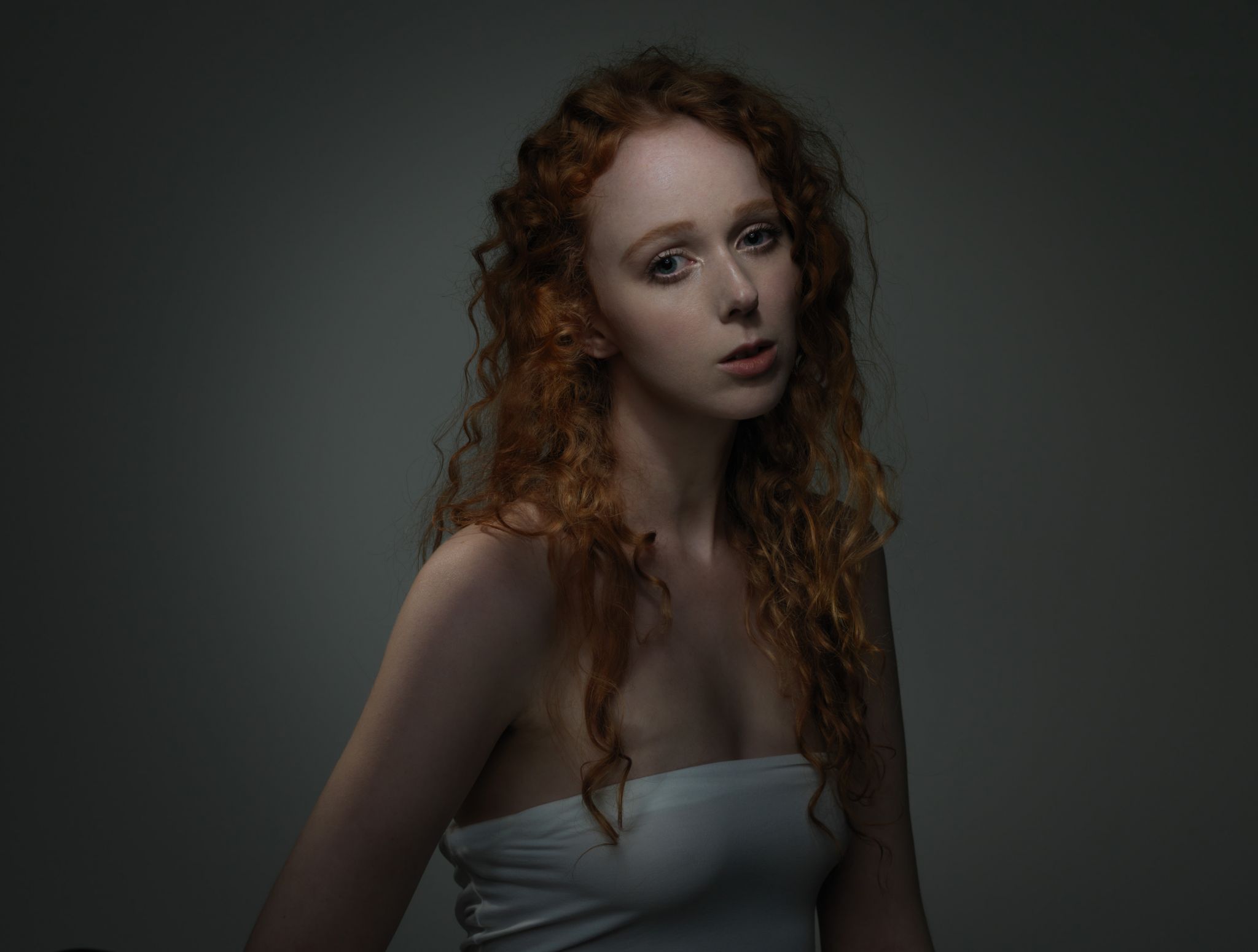
Karl then proceeds to explain and demonstrate the effect of a number of more specialist modifiers before putting them to use to create a moody portrait image. Using precise control, he shows, step-by-step, how to balance multiple lights and how to use pockets of light for a striking final result.
This information packed show is a must-watch for anyone wanting to better understand the theory of light and see just how it can elevate your photography.
In this class:
- The theory of light
- The interaction between skin and light
- Hard vs soft light
- Lighting modifiers and their effects
- Softboxes – How to use them for different effects
- Inverse square law
- The angle of incidence and its effect
- How matte and gloss surfaces react to light
- Photographing using multiple lights
- How to photograph people with glasses
- Combining modeling lights and flash
More information on some of the reflectors used in this workshop can be found in our blog posts Softboxes and The Magic of Parabolic Lighting. Our Portrait section also covers more of the theory of light and how we can control light.
Comments
Hello, Karl. How about we use to strip softboxes side by side instead of a big softbox? two 30cm x 120cm strip softboxes?
Hi Pat, yes that’s perfectly feasible, that would give you 60x120cm
@11:16 would love to see more breakdowns on thickness of diffuser density. One’s that do not color cast and are neutral. I know in most softbox videos you seem to use the thickest full diffuser, but would love to see you compare less thick like 1/4 or 1/2 thickness to see the change in light quality, which could be a creative decision, if needed. If I understand correctly, a thinner diffusion would be a harder source due to still seeing the bulb, but it also spreads the light 180 degrees to fill in shadows. Do you only use the one density because you can place the lamp closer which creates a hot spot or further makes more homogenous? There are so many diffusion densities out there. Would love to see you break them down in a live video and how a thinner diffuser could be beneficial.
Hi Ty, most good softboxes use a very similar material with a similar thickness. Each brand may give a slightly different colour bias away from Neutral, I found the older Elinchrom and Bron to be slightly warmer but other cheaper brands to be slightly bluer. The thickness isn’t something I’ve seen in different softboxes, they are a fabric so all very similar? When it comes to diffussion paper then LEE Lux 400 or LEE 216 give the best results similar to white opal acrylic but I wouldn’t overthink this stuff. You just look at the results and move the light further or closer from the diff material.
@17:30 never thought of it this way, but “light fall off” is very much the same thinking as a “lens DOF fall off”. The closer the lens is to the subject, no matter the aperture or lens size, the greater your depth of field—which is governed by the difference between the distance of what’s in focus and infinity on the lens. Light fall off is the same thinking— is it not? The further the light is placed from your subject—the more evenly lit she and your background will be. For this “lens comparison”—this would be everything is in focus—bcuz she is too close to background and too far from the lens. If the light is closer to her, inverse square law, the fall off onto background is much greater. Same goes for your lens when closer to your subject. Makes it easier for me to understand and remember. Correct me if I’m wrong? Light fall off and lens DOF fall off are very much similar thinking.
Hi Ty, yes but I think you meant to say ‘the closer the lens is to the subject the LESS your depth of field’. Depth of field is primarily governed by magnification. As soon as you make something bigger (closer or telephoto) then DOF decreases. What you said about light fall off is correct, the further away the light source from the subject then the less change in the intensity of the light over a given distance. If you haven’t seen this class already this is a new one where I explain the inverse square law with some more examples: https://visualeducation.com/class/understanding-inverse-square-law/
hey karl
urs said that even if u use the strip softbox wont give u the same result bec of the angle of it
am just confused about 180 degree angle that urs was talking about
Hi Amr, can you point me to the timecode in the video please so I can watch and check and then reply.
54:28
Hi Amr, what Urs was explaining is that as with all softboxes that have an homogenous illuminated surface is that the light will escape from the front in a 180 angle. Using a thin strip box on the model to create the same catchlight in the eye would not give the same lighting result on the face as this set up because in this set up from the models position it looks like a thinner strip box because of the angle it is being viewed, however the exposure levels hitting the face are very different because one side of the softbox is close to one side of the face but the other end of the softbox is far away meaning that the light is much less powerful from that end. This means we have a more gradual fall off in exposure on the models face, which you would not have if you used a thinner strip box facing directly at the model.
Urs is really brilliant. In this one video I created a loooong list of learnings. You guys are a great bringing up any point the other forgot to mention. Great video lesson.
Thank you.
Wow – this is another outstanding module.
I would highly recommend this as one of the essential modules in the lighting theory section. I stumbled over it when I was looking for information on the modifiers for the creative portrait 2.0 show and it answered a bunch of questions for me.
It is packed with very useful information on the various modifiers – and many of these techniques would solve a bunch of little problems I’ve had, and those little problems always annoy me as the shots are never quite good enough.
Awesome stuff.
Thank you.
Hi Karl, does the model light go off when the Broncolor flash flashes, or does the model light glow when it flashes?
Hi, they stay on, sometimes they dim a little as do other brands. They never really go off even if you think they do simply because the flash part is so fast they don’t have time to dim down enough to make any difference. Although you can turn them off altogether if you want to once you have your lights set up. Generally speaking using them the modelling lamps on low power they won’t cause any light pollution into your main shot unless you’ve set your shutter speed very low and aperture very wide.
Thank you so much, Karl!
I am so happy about all the possibilities to watch and to lern here in “karltayloreducation”
I can`t afford all this wonderful stuff from broncolor ( I am a beginner therefore it is not necessary anyway) , but I am so happy to watch it ( the broncolor paras in the background, magnificent!) -, to observe how to use it and to enjoy your playful education ( like a boy – or in this case two boys – in the playground 🙂 or even more appropriate for light: in a billardroom).
The most important gift for me: finding inspiration by someone who adore playing with light!
Thank you Elke, also many of the techniques we show can be applied to other types of lights or less expensive accessories. In other classes you will see how that can be done, even with speedlites.
Both of your passion for lighting is infectious and a joy to behold. This video is the ultimate lighting offering in your catalog, IMHO. It’s a balanced mix of practical, theory, and commentary. I’ve learned so much from you two, and I’m eternally grateful. Thank you.
Thank you so much. All the best Karl.
This video is hidden gem of lighting video. Excellent work, learn so many new basics of light and how it works. Thank you Karl , Urs and team.
Thank you 🙂
How to I upload my picture to my profile?
very lovely explained and awesome demonstration of modifiers..
Thanks Karl
I’ve watched this episode a lot and I learn something new each time.
Karl Taylor and team I have a question, Karl said something about certificates or achievements, is there something in the works?
Hi Doug, yes that is now available on our sign up page you will see the new mentor and certification plan.