


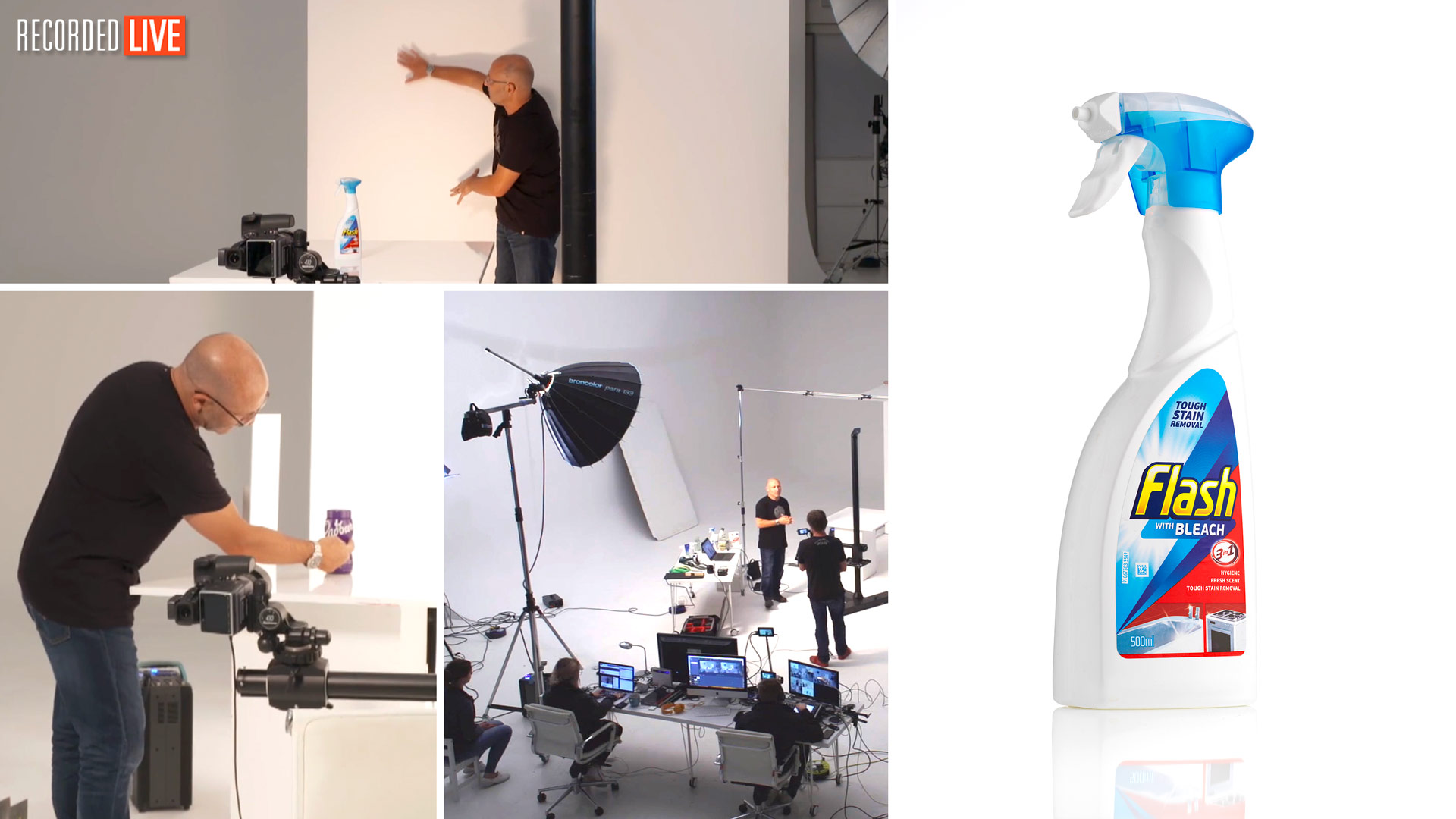

Packshot Product Photography

Want to perfect your packshots? Find all the tips you need in this comprehensive tutorial.

Discover how to achieve a clean white background, photograph reflective surfaces, control unwanted reflections and shadows on your products, and much more!

When you’re shooting packshots, speed and efficiency are key. That’s why it’s essential to have a lighting setup that’s both suitable and simple.

In this class, recorded LIVE, you’ll learn how to set up, light and and capture successful packshots.

Working through multiple products, Karl demonstrates just how important perfecting your lighting setup is. Starting with a simple two-light setup, he shows you how to achieve a professional result quickly – even if you’re working in a small studio and using basic modifiers.
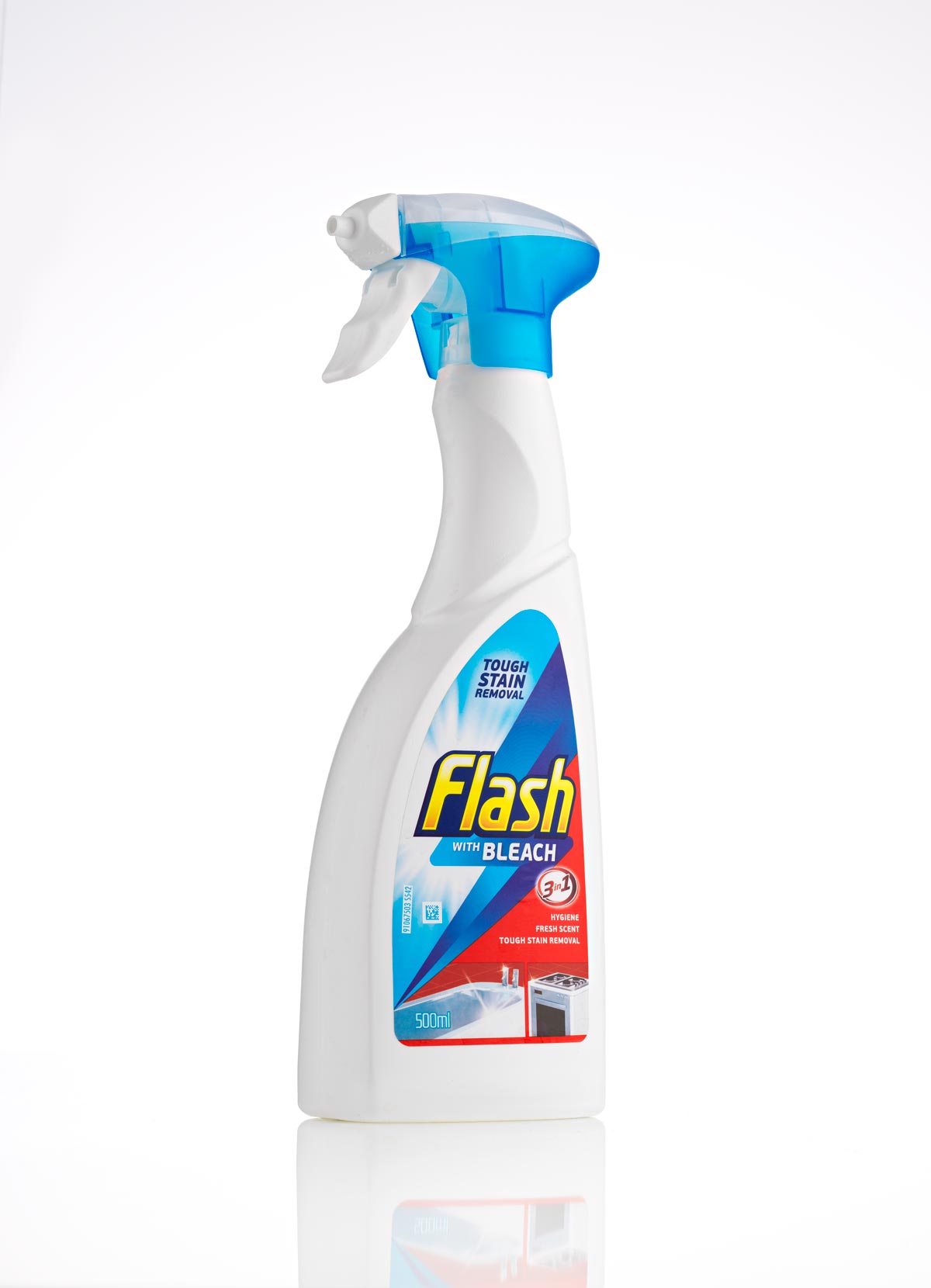
In this class:

  • Product photography: Packshots
  • How to photograph packshots
  • Studio lighting setups for packshots
  • How to achieve a pure white background
  • Small studio photography
  • How to control shadows
  • Controlling reflections on shiny objects

If you enjoy this class, check out Packshots: White Background Product Photography.

Questions? Please post them the comments section below.

Comments

  1. Hi Karl,

    How can I shot whit product ( 3x smoke detectors ) on a white background front the top view to get a perfect shot ?

    Thanks

  2. Hey Karl,

    Great video! What is the scrim material that you used to unroll to diffuse the key light?

    Thanks,
    Randy

  3. Hi Karl, love the video! I’m currently doing a pack shot of a round shampoo bottle with a semi gloss label and a gloss lid. The label and lid I’ve got perfect, but I’m getting a lot of light spill on the sides of the bottle that make the edges hazy for cutting out PNGs. Is there a way to define the edges more? My setup consists of 3 lights, 2 lighting the background at 45 degree angles (as you described would be ideal in the beginning of the video) with simple hoods and no diffusers, and a single large soft box lighting the product from the front through a diffuser, using a mirror to light the opposite side. I do also have small, square soft boxes and honeycomb grids, would either of these work better for the background lighting? Thanks!

      1. Hi Karl, thanks for the prompt reply. I’m actually using flash, Elinchrom BRX 500s to be specific. I rewatched the beginning of this video and it answered my first question. My remaining question is just what would be the best light modifier to use when lighting the backdrop with 2 flash lights. I have square soft boxes and honeycomb grids. Thanks.

  4. Hi Karl, I’ve been through most of the packshot videos, including this one, and have a question. Here’s the setup : 1) shooting pack shots of handbags “straight on” as you are doing (or at say 25 degrees to the product), and (2) want to produce a slight shadow underneath the object, not a reflection (this is different than the setup with the glass, where you produced no shadow at all); 3) the subject is sitting on a matte white board (the type you can buy in a hardware store) and (4) lighting on the subject from above, to produce a slight shadow underneath, and to “skate” the light across the fabric to create some detail and contrast; 5) lighting a wall in the background to 255. The Problem : there is always a horizon line. How to shoot pure white, with a shadow, lit from above, and do so without creating a horizon, so there is no need for post production beyond cropping? Is the only solution a seamless white paper or board painted white and curved upward, as you suggested in the other videos – to create a “seamless” – and doesn’t this solution risk serious flare unless you use a huge long roll of paper or go through substantial trouble to flag out the background lights? Or is removing the line in post the simple and best solution. Any advice appreciated. Great videos and great work on this site.

    1. Hi Matthew,
      1. Yes understood
      2. Yes understood, this would require a matt surface
      3. Yes but I don’t know which type of board you mean
      4. I understand that you are lighting from above to create the shadow on your base surface but I don’t understand what you mean by ‘skate’ the lighting across the fabric?
      5. Yes good
      6. This is very difficult to do without the whitest possible board, so as you say a seamless curve of hardboard painted with ‘Pure Brilliant White Trade Matt Vinyl (not the cheap stuff)’ then the lighting from above needs to me more from the back
      7. Also you can use 3mm pure white matt acrylic and make it into an infinity curve and then even add some light from underneath through it too. There is always a risk of flare if you push things above 255 but this comes down to careful control, flagging, barn doors, grids on softboxes etc etc. You have to weigh up if you can easily create a repeatable setup that will achieve it or if it’s easier to do it in post!
      8. This is a good question though so what I’m going to do is add this as a topic to create a new class you on this for later this year.

        1. Hi, I am using the green cloth to see if I can see its reflection in the surface so that I can identify exactly where the light should be to create the best lighting reflection in the surface.

  5. You make a comment “this is why this is the best educational course out there”… I couldn’t agree MORE!!! I, sadly, found you after purchasing a number of other classes. Yours absolutely blows away the others…hands down…

  6. Howdy.
    I have a potential client who wants potentially thousands of simple pack shots for web but at a very low price. Small products all similar. Obviously I don’t want to compromise quality, but
    I’m wondering if, like you demonstrated, I get the set up exactly right, would there be any strong reason not to shoot in jpg so there is basically no processing required.
    Grateful for any pitfalls I might be missing.

    1. Hi Stephen, if your set up was absolutely perfect and you had no need to recover highlights or shift colours afterwards then there is no problem at all just shooting in jpeg. However personally I’d just set it up perfectly shoot them all in RAW and then not touch them and just batch export all of them as jpegs immediately after which would only take a couple of hours and it would be automated. Then if there was a problem with any of them I’d still have the RAW file too.

      1. Many thanks this seems like the optimum solution. I was actually doing some tests last night and a few needed corrections so I’ll separate those out and negotiate a higher price for these!

  7. Hi Karl! Thankyou for a great tutorial. I work as a product photographer in the equestrian industry and one of the products I am commonly photographing are Bridals & Halters. I have a jig that I’ve made which allows me to string them up so as to see them from both sides which you wouldn’t were it on a horses head. Clearly this isn’t “pack” photography as just the time it takes to string them up and make them look neat and tidy (and correctly positioned as if they were on a horses head) can be very time consuming, however the larger complexity I’ve had to overcome is regarding lighting, and this ties into the technique I saw you use in this tutorial. The additional complexity with Bridals & Halters is that they are often made of polished leather and also have shiny metal details in the buckles, bits etc. I have found that bouncing two strobes off the studios overhead white ceiling and then using several white reflectors around the product jig (as close as I can get them to the product) works fairly well. Would love to see you do a tutorial on a product such as this.

    1. Hi James, yes it sounds like your techniques gives you the simples solution all round but it might also benefit from a bit of additional hard/spot lighting on key areas of the product to give it a bit of bite. This is a slightly different horse product but you may be interested none the less https://visualeducation.com/class/moody-lighting-for-an-antique-style-saddle-shoot/ this uses hard lighting but lots of it. Also many of our other product photography classes with scrims will give you some good ideas of techniques to try. All the best Karl.

      1. Hi Karl! Thanks for the reply 👍 Yes I absolutely agree that it could benefit from some additional bite. I saw your saddle shoot a few months ago and showed it to my head of marketing. She was a big fan. I took over the role early this year and am currently in the process of trying to get some upgrades to the studio. Currently only have two strobes and 2 very small modifiers. No backgrounds, no grip arms or C-Stands etc. Good thing I like a challenge and DIY solutions 😉 Your tutorials have helped massively over the years. Glad to be back and able to watch all your new content. Thanks again.

  8. Hi Karl! I’m curious about pack shoots for fashion accessories. If there’s another class on that I’d love to watch it (haven’t seen one though). If I were to shoot purses, watches shoes etc for e-commerce uploads.. would you still use the same light configuration? Also would shooting flat from above or straight forward be the client’s decision or is there a ‘standard ‘ way of shooting for these types of accessories. Thanks, these classes have been really fun and super informative

    1. Hi Kelloosh, thank you for your feedback. Packshot photography is essentially high volume product photography that tries to find an easily repetetive method of photographing stuff. As such it doesn’t really matter which lighting setup you use as long as it works for the type of products you need to shoot. Of course we have hundreds of classes and live shows covering a variety of products – this one in particular you might find interesting based on what you said but please also explore the others – https://visualeducation.com/class/live-photography-workshop-fashion-accessories/

  9. Hi Karl, I am new to product photography. I need to photograph books for a client on white background which are going to be used in an app where different products are going to be sold. Would you suggest to lay the books flat or in standup position?

    1. Hi, this decision has to come from your client and what they require. I wouldn’t move forwards with a project like that without the client providing a ‘mood board’ or an example of what it is they would like. Once you understand this then I can direct you to the appropriate lighting class.

      1. The client want an upfront photo of all the products, including the books, and a shot of an angle. Which classes would you recommend? I followed this packshot class and that was already a great help. Thanks for your good videos.

  10. Hi Karl,

    All of your videos are super helpful. In this video, you talk about the space being a min of around 3m x 2m for shooting the packshots in. Currently, the only space I have available to me is 2m x 2m. At some point could you do a video where you are shooting in a space this small, maybe inclosed with v-flats to simulate dealing with the light bounce from a small room. I am especially interested in trying to shoot handbag/ trainers size of products.

    Thanks

    Tian

    1. Hi Tian, working in a small space like this is possible and we have covered this in previous live shows. Essentially you need to control light bounce so you will need to consider making certain walls and the ceiling black with fabric or using velcro to stick black foam board in position.

  11. This is great Karl. I photograph Antiques and jewelry for a living to put online for auctions and I’m always looking for the fastest and easiest way too photograph these items. I usually make it work. Unfortunately I do not have a studio and just use available space. My go to is bouncing a strobe right off the ceiling to create an even “ambient” style light. It tends to be “flat” but it gets the job done. It was refreshing and and a relief when I saw you bounce a light right off top scrim. I guess I was doing something right.

    -Mike

    1. Hi Mike, thanks. Also see our jewellery photography on Rings the techniques should be helpful to you.

  12. Really good stuff in this Karl! I have learned a lot. If the client wants a “light gray” tonality background instead of pure white at 255 levels, would you use a gray colored background, or would you just use a white background like in this video and get your levels in camera to around 235 to get that slight gray tonality? A lot of e-commerce requests I have received want light gray to match their website background and trying to find the best way to accomplish… with gray colored paper or with camera levels? Thanks!

    1. Hi Tyrogers, yes exactly that I’d still use a white background wall but I’d light it with less light. When I’m at a reading of R236, G236, B236 then I know I’ve got 10% grey. The easy way is to get an image of the tone the client wants to acheive and then measure the RGB values in Photoshop and then you know what you need to light it to. You need to light it evenly of course so the methods of lighting backgrounds are covered in various courses here, from bouncing the light into white v-flats or polyboards or using softboxes to spread the light if necessary, it all depends on the area to be covered. If you look at the shot of the black glasses floating in the air that I did for Diesel on this page – https://karltaylor.com/objects you will see how they were shot on a 10% grey background (236,236,236).

  13. Hi Karl,

    Great Video! I would like to know where I can purchase the overhead Skrim you are using to bounce off the light for the shots from the top? Additionally in the case I do not have a white ceiling or the ceiling is simply to high (e.g. warehouse of a client) would it be advisable to use an umbrella with diffusion or a large softbox with a single light boomed out to be exactly on top of the product? Thanks in advance for your answer.

    1. Hi Kaygu, the overhead panel here is just foamboard. It’s available in black or white from Art supply companies and often Sign service companies, you can also use large sheets of polystyrene which is used as wall/floor insulation and available from building merchants. Any white panel will work or if you had a large enough softbox on a boom but that’s probably too much for this set up.

  14. what was the purpose of having the overhead sheet of acrylic ? was it for extra bounce?
    reason I ask is I’m working a small work space with low ceilings
    if I’m shooting say black on black the white ceiling would be an issue?

    1. Hi Mdoza, yes the overhead sheet was a fill reflector to bounce a little more general soft light into the area. And yes white ceilings can be great for this but they can also be a problem in other scenarios where you don’t want light bounce, I recommend using velcro and black foam board panels and sticking them to the ceiling when necessary.

  15. Hi Karl,

    Great content as always. I was reading through the comments and saw your advice of using matt acrylic to create a shadow rather than a reflection. I have been asked to do shadowless pack shots. Do you have any advice for creating this in camera or is it a matter of cutting them out in Photoshop after the fact?

    Thanks.

    1. Hi Squiggle, it depends on the angle you are shooting the pack shot. You get a better white off of the gloss acrylic if you are shooting a standing product because the gloss is reflecting the background white, then just photoshop the reflection of the product out too white too. You’ll see in the live show listing I’ve got another technique for shadowless shots coming soon but this only applies if you can shoot down on the subject.

  16. Hi Karl, I’m currently shooting food items in clear plastic bags/packaging (crips packet shape). I’m using a polariser filter which helps but I’m sill finding it difficult to get the results I want especially within a timely manner.

    The solution Im using is placing a scrim closely in front of the product, then shooting 120 x 80 soft box at a 70° angle placed against that top of the scrim and shooting a P70 through a small thick scrim as the background.

    I want to portray that the item is glossy whilst eliminating unwanted wrinkles and creases. I feel what I have is close but not quite up to scratch.

    Have you got any ideas? I’d love to hear your thoughts!

    1. Hi Jack, yes it’s a tricky one and I don’t like photographing products in those sort of wrappers because the angle of reflections can be so different every time. As you probably know the key problem is the angle of reflection, so your light source is bouncing off the clear plastic and creating unwanted highlights. If you think about that for a moment there are three possible solutions, 1. No wrapper 2. Polarising filters 3. The angle of incidence of the light. All of these have their own problems but let me give you a couple of ideas. First if all the packets are the same size and position you can cut the tops off of the wrappers and then create a photoshop version of the top of a wrapper and paste it onto every pack. Changing the angle of incidence of the light is great for a given wrapper but unfortunately they will never have the same angle of reflection on every packet and you may not then get the lighting angle suited to the product inside the wrapper, however by changing the focal length to a much longer lens you will change the angle of reflections and have a little more versatility. Finally polarisers are great but consider using them on the lights as well or instead, see this live show – https://visualeducation.com/class/live-workshop-polarising-studio-light-and-why/

  17. Great courses. Love them.

    Can a large softbox be used overhead for top shots instead of bouncing light into the ceiling?

  18. hi Karl and team,
    thanks for the work you are doing, keep it up!

    general question: can a packshot be also on black background or if so it gets off that concept?

    1. Hi Kareas, A packshot could be on any background. The term packshot usually refers to a relatively easy product shot to set up, light and shoot and that you could use the same set up for a series of 50 or 100 similar products. This is why packshot services offer low prices because they are usually working in bulk. It becomes a proper product shoot as soon as more creative lighting or a set is required.

  19. Hi Karl,
    Oliver from Germany. I am new to your courses and enjoy and learn a lot.
    One question regarding the boxes you use to put the products on. What size are they?

    1. Hi Oliver, thanks for joining us. If you mean the big blocks that I regularly use to make a low or high table, I have two of them and they are 40x40x70cm.

  20. Hello Karl,
    I really love your videos and learnt tons in this one.
    I am new to photography still though. How does Ash control the amount of stops on the light sources? When you mention to her she should turn it up by half a stop, how does this work?

    1. Hi Sonny, it of course is best practise to flag everything to avoid flare but sometimes I’m a bit lazy and if I don’t see a problem then I don’t fix it! 🙂

  21. Hey Karl,

    Great episode!

    Are you able to get that same pure white surface the product is on (when only illuminating the background) with a non reflective surface, say a matte paper surface?

    Sarah

    1. Hi Sarah, no not with this technique unfortunately, instead you have to light from above and behind directly onto the white but this can create problems of lighting on the product so you have to control it carefully.

  22. You mentioned in this video that you cannot use a polariser on metal surfaces. This confused me as I use polarisers very often with automotive photography as they have a huge benefit on car body work, which are very often metal. Why is this?

    Much Appreciated

    1. Hi Thomas, because the surface you are photographing is not metal, it’s 3 layers of paint and a 2 layers of laquer.

  23. What is the White Balance you use for all your photography shoot?
    What is the Metering Mode you use for all your shoot?
    Suggest the learning topic to refer for all the Camera Settings?

    1. Hi,
      White balance: Flash (as i’m mostly shooting flash, or daylight 5600K which is the same)
      Metering Mode: I don’t use a metering mode as I don’t meter. I set my aperture based on the depth of field I require and then the shutter speed until the ambient light is at my desired exposure.
      All of this sort of stuff is covered in our Introduction to Photography course in the Essentials section.

  24. This was a great video. What kind of surface would you recommend putting the product on if I wanted a bit of a shadow but no reflection? I have found with my shots that shooting on perspex gives a brilliant white, but a strong reflection,; paper works but its harder to get pure white without a lot of photoshop work after.

    1. Hi Matt White, plexiglass (perspex/acrylic) here in the UK you can buy it in gloss or matt and the matt is a very good solid brilliant white.

  25. hi Karl ,Anish from India l love your way to explaining shoots
    how can we achieve white background in jewellery shoot for E-commerce
    without cutout background

    1. Hi Anish, the same as our Jewellery rings class but also add a small softbox from underneath on a very low power through the acrylic.

Leave a Comment